Showing posts with label Teaching. Show all posts

3.05.2014

Navigating Readers and Reading

http://luciediamonds.deviantart.com/art/Lost-In-A-Good-Book-174529828

I just finished Navigating Early by Clare Vanderpool.  I read it not only because I pledged to read 40 books this year or because there is a bunch of hype out about this book, but because I have a son in 5th grade for whom I am constantly trying to find enticing books.  Books that he can just get lost in.


Navigating Early is about two boys who embark on a quest to find the infamous great bear deep in the woods of Maine on the Appalachian Trail.  One of the main characters, Early, is complex, and it takes going on this trip for his friend, Jack, to figure him out - to truly navigate him, as well as figure out the direction in which his own life was taking him.

Before I became an instructional coach, I was a high school collaborative English teacher pursuing a degree in Reading Education.  In class, I stood on my head to make literature exciting for my students.  I wanted my kids to love reading as much as I did.  Ironically, I was trying to help them find this passion for and flow with reading through works like Homer's The Odyssey, Shakespeare's Romeo and Juliet and Othello, and Chaucer's The Canterbury Tales.

Have I mentioned I taught struggling readers?  I got pretty creative with my lessons, and my kids either seemed to like the novels-plays-very old pieces of writing by dead white men, OR they were just being nice to me because I was expending so much energy helping them understand what they were reading.  I was really doing all of the sweating, not my kids.

Now that I look back, I never once saw my students feel the need jump out of their seats after class, sprint to the library, and check out another one of those classic books in the canon for which high school English teachers are notorious.  I am not advocating ditching the teaching of these famous classics - Kelly Gallagher states in his book Readicide that it is important to teach kids how to navigate them.  Furthermore, it is important to find the balance of not under-teaching or over-teaching these classics, in addition to augmenting with real life reading.  But, how do we do this while building their own love of and interest in reading?


Now that I have my own struggling "I-really-wish-I-could-read-like-everyone-else" reader, I understand that intense desire to pour over a book is truly there, especially one that seems exciting. It's just the letters, words, and even type of book get in the way.  He tries with all of his heart to decipher the words on each page on his own, but I know he stumbles over most of them and only manages to only get a gist of what he is reading. The plot of Navigating Early couldn't be better suited for my adventurous, outdoor-loving son.  He picked it up and really tried to read it, but could not get past the first chapter on his own.  For other kids, they might be able to read all of the words fluently, but have no background knowledge to aid them with understanding the concepts they are reading.  They too, only get the gist of what they are reading.  Just like the students Gallagher was speaking about in his first video.

So back to navigating readers.  How do we really get to know our readers?  How do we find out what they like to read?  How do we find books they are comfortable with reading to help them build fluency?  How do we give them time to read what they want in addition to giving them time to read real world material?  How do we navigate them, as readers, to help us know what they are struggling with in the text.  And how do we help them navigate reading so that it is an amazing experience?  

I am grappling with all of these questions as I read the following books by Donalyn Miller, Penny Kittle, Kylene Beers, and Chris Lehman.  In the meantime, I will download the audio version of Navigating Early for my son so he can get lost in the book without spending most of his time tripping over the words.


Fun Resources I Have Found Along the Way

As a first step, check out the following links.  They provide exciting reading material that kindles curiosity and builds knowledge - they might tie in to some of your content area reading!

Elementary and Middle School


High School 

Article of the Week (Resources from Kelly Gallagher)


8.22.2013

Words of Inspiration

Throughout the past months, I have come across some wonderful TED Talks and You Tube videos that have either made me reflect on my teaching practices or want to immediately jump into action. Here are a few of my absolute favorites...enjoy!

Embracing Failure with Extreme Excitement - Audri's Rube Goldberg Monster Catcher


The Power of Introverts - Don't forget about them in your classroom!


Every Kid Needs a Champion - Especially one who sees the value of "plus 2" in life!


Sir Ken Robinson - Bring on the learning revolution!


8.11.2013

The Most Wonderful Time of the Year

Do you know that back-to-school commercial where the dad is dancing and skipping through the office supply store, sprinkling school supplies in his cart as his children follow morosely behind?


I always giggle when I see it - every single time!  As a parent, I know so many parents who identify with the father in the commercial and his excitement for the start of the school year.  But, as a teacher, I am as giddy as the father in the commercial!  It truly is "the most wonderful time of the year!"  I love back-to-school shopping with my kids, but mostly, I love this time of the year because it is a fresh start after re-charging during the summer.  I was also able to re-charge, ironically, by working this summer!  I worked with many awesome teachers who spent their summer honing their practice...even during vacation!  Below is a recap of some of our work:

June

My summer started in June in Stillwater, MN, where I attended and presented at the 6th annual Flipped Learning Conference (FlipCon13) with an amazing chemistry teacher from Albemarle County Public Schools (ACPS).  The conference was electrifying and we had the privilege of meeting educators from all over the world, who came together (in this small town that I had never heard of) to share and discuss their best practices and ideas.  Every educator there had a sole focus - they were searching for the best way to engage, excite, and ignite their students' passion for learning.  Jon Bergman, Ramsey Musallem, Katie Lanier, and April Gudenrath are just a few of the phenomenal teachers we got to meet and pick their brains about their experiences with flipped teaching.

July

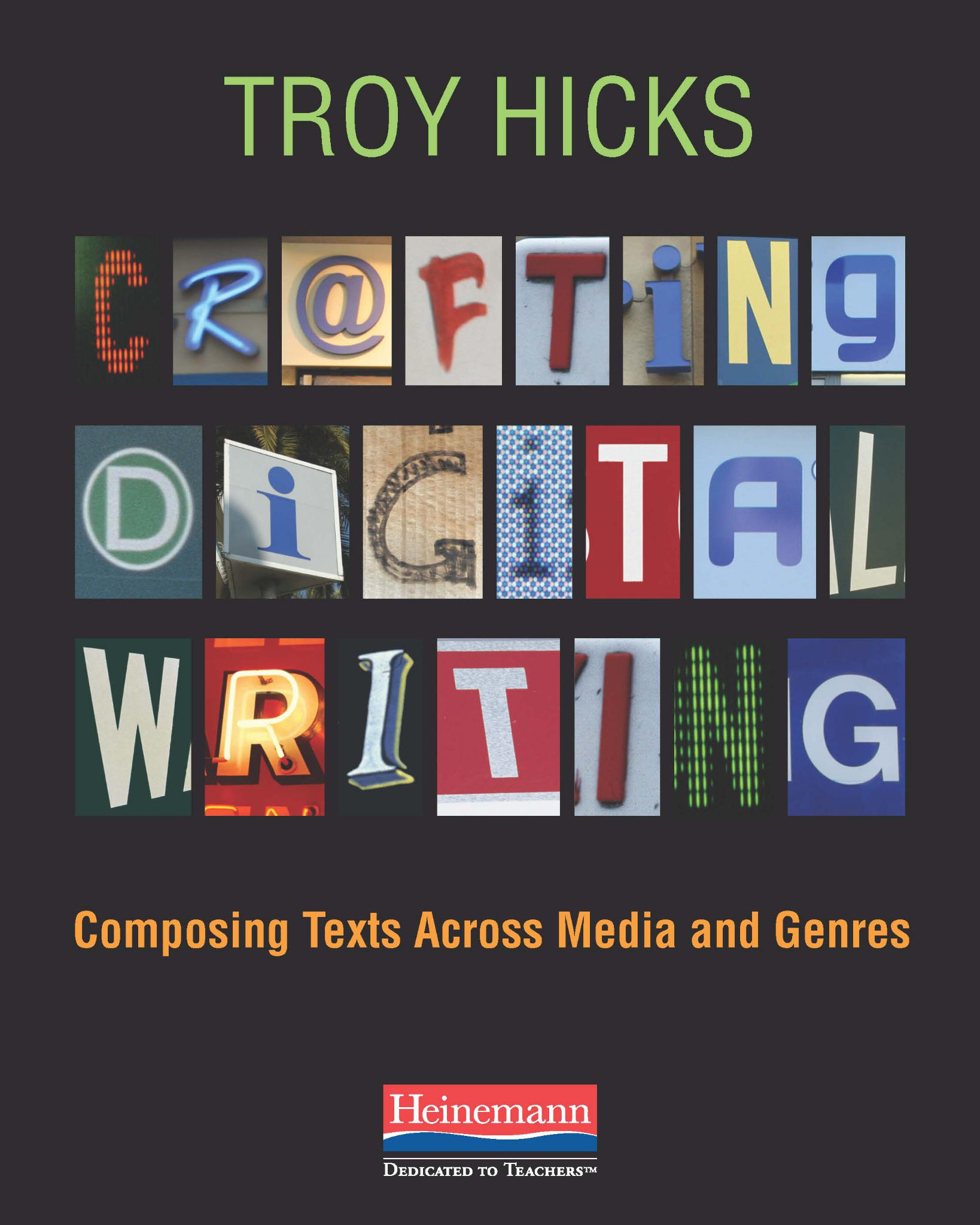
In July, three colleagues passionate about writing and I initiated a book study with teachers interested in Crafting Digital Writing.  Teachers from across the county took time from their summer to meet on three different occasions share their writing practices, look at different writing perspectives, and collaborate to build a digital writing lesson.  We were fortunate to be able to gather ideas from the author of the book, Troy Hicks, both through a live webinar and in person when he visited the county.  I am excited for our next book club meeting in September.


Also, I talked about teaching, learning, and classroom (and library) spaces with the teachers in my Twitter professional learning network (PLN).  We threw teaching ideas and book suggestions at each other.  We read books together.  We reported back to each other.  We shared excitement for each other's plans and spaces for their new school year.  This was one of my favorites because we were so excited the author got in on our conversation too!


August

During the first week in August, I had the opportunity to hang out with teachers new to ACPS.  Let me tell you, I had so much fun! The enthusiasm and energy abounding was contagious.  Everywhere I looked, teachers were laughing, collaborating, and opening themselves to new opportunities like creating a PLN by using Twitter (as introduced to them by our Superintendent).  Throughout the two days of New Teacher Academy, teachers got to know each other and ACPS's mission, goals, and priorities through interactive and highly engaging activities, which I am sure will be passed on to the students they work with this year.


Additionally, the 24 ACPS Instructional Coaches and 7 Lead Instructional Coaches gathered to plan for our work this year in the 26 elementary, middle, and high schools we support.  What fun time we had! Some highlights were creating a metaphor of our coaching practice by making with legos, pipe cleaners and cotton balls, as well as rallying our passion for a common text.  As a group, we will be reading and discussing throughout the year The Art of Coaching by Elena Aguilar.  I cannot wait to delve into this book and into the conversations we have as team of coaches.


After all of these summer experiences, I am so geared up and ready for the start of a brand new school year.  Not only do I have my Moleskine journal and a surplus of my favorite colored Sharpie pens ready, but I also have the numerous ideas, which came from many conversations with teachers far and near, tucked away to bring to school with me this year. I cannot wait for the adventures this school year will bring!  This truly is the most wonderful time of the year!

7.16.2013

The Power of Questions and Feelings of Discomfort

“Discomfort brings engagement and change. Discomfort means you're doing something that others were unlikely to do, because they're hiding out in the comfortable zone. ” 


I have two boys, one a rising 3rd grader and the other a rising 5th grader. Because we live in the country, their school bus arrives promptly to pick them up before the rooster crows.  For this reason, I have driven them to school every day since Kindergarten so we can leave after the sun has risen. However, I think the real reason I chose to drive them to school was a little more selfish on my part - I just wanted to spend a little more time with them.  I imagined a charming ride conversing about their hopes, dreams, and wishes in life.  In reality, our car ride has been comprised of 15 minutes of intricate questions posed by my boys - questions ranging from how to raise a pig or string a lacrosse stick to the thickness of the electrical lines or the inner workings of a generator.   Questions that I do not know how to answer because they are topics that simply are not on my radar.  By the time I arrive at their school, I find that I am so flustered and uncomfortable by their barrage of questions, as well as my ineptness in answering them, that I have erased all desires for our special time together.  Instead, I am filled with joy when I unload my boys in front of their school in the capable hands of the librarian, the perfect person to answer their questions!

I am an Instructional Coach for Albemarle County Public Schools.  Prior to this, I wore many hats.  I was a special education case manager, a reading specialist, a transition specialist, and a collaborative English teacher.  This past Spring, I was asked by a teacher, who did not know me in my previous life, what my expertise was.   Our County's coaching model assumes that Instructional Coaches are generalists not specialists, embedded professional development for teachers as they focus on the process of teaching.  As I fumbled for words to find an answer for this teacher, my county's Director of K-12 Education calmly jumped in and said, "Her expertise is questioning.  The Instructional Coaches are experts in asking questions."  Wow! Such a succinct answer, but such a true answer.  I have never thought of myself as an expert in questioning, but it is something that I now do every day when I am working with teachers.

When I first embarked on my career as an instructional coach, I balked at the questioning stems provided to me for my conversations with teachers.  What was the big deal about these question stems? As a veteran teacher, I comfortably spoke and collaborated with teachers, thought I had all of the answers, and prided myself in being able to provide a menu of options to them.  What I realize now is that using these question stems initially made me feel very uncomfortable because they were something new to me - they were not in the realm of my comfort zone.  However, they came to grow on me. Lately, instead of just talking to teachers, I find I have been asking tons of meddlesome questions - just like my boys! The teachers with whom I work have me constantly wondering with genuine curiosity. It isn't until now, as I start on my fourth year of coaching, that I realize the power of asking these questions to teachers.  They are questions that sit with teachers and gnaw at them late at night. Questions that drive inquiry, bring a nagging discomfort, and result in a nudge leading to an adventure in a whole new world. 

This past year, a teacher lamented to me about grading the papers for all of her 140 students.  I didn't empathize or commiserate.  Instead, I found myself wondering aloud to her  about the possibility of "flipping" feedback to all those students using screen casting technologies. I did this using my "I wonder what would happen if..." questioning stem without thinking - it just naturally burst out of my mouth.  I will never forget the look this teacher gave me -  a look like I had just landed from Mars and had three heads.  She quickly and emphatically exclaimed, "No way!"  And with that one question, she ditched me as expeditiously as I unloaded my boys from my car.  A week later, that same teacher sought me out and thanked me for my question.  She had tinkered with the technology and found a way to provide more meaningful feedback to her students.  This year, she is embarking on creating a digital writing workshop in her classroom.  Another teacher recounted the events of her new blended teaching practices in a presentation to the school board stating, "It all started with one question from an Instructional Coach."

Although, I only asked simple questions, these two teachers embraced them and wrestled with them.   They allowed themselves to reflect, to be nudged and to be irritated by a question, which ultimately has led them on new adventures in their educational careers.  Furthermore, they brought me along on their wonderful and wild ride.  It is on these adventures that I have learned so much from and been in awe of each teacher's ability to allow themselves to be uncomfortable, really uncomfortable.  It takes great strength to do this. These teachers are now leaders in their school, the county, and their wider professional learning network. They are not only facilitating meaningful learning with their students, but also their colleagues.

So, maybe questions aren't so bad after all.  Even my boys' simple questions about farm animals, sports equipment, and machines have been a blessing.  Inevitably, at some point in my day, I find myself googling "raising pigs" or whatever their inquiry of the day is.  I google because curiosity nudges and pokes me.  Had these teachers or I never experienced (and seized) the discomfort resulting from a few simple questions, we might never have understood their power to drive change. How true it is that "Life begins at the end of your comfort zone."